Suhanko mine
A polymetallic deposit containing critical metals
Suhanko Arctic Platinum Oy is preparing to open the Suhanko mine in Ranua. The planned mine will produce mineral concentrates containing palladium, platinum, copper, nickel, cobalt, gold, and rhodium. The Suhanko concentrator will produce two different concentrates (Cu-PGE and Ni-PGE) using the traditional flotation method. The mineral concentrates will be delivered to smelters.
Suhango's metals are included in the EU's list of critical metals and are essential as Europe strives to produce green energy, reduce transportation emissions, achieve self-sufficiency, and electrify societal functions
Palladium, platinum, and rhodium in the manufacture of automotive catalytic converters
Platinum for a zero-emission hydrogen economy
Copper for the electrification of society
For the nickel battery and steel industries
Suhanko is a major mining project
A major mining project is in the planning stages
Ten million tons of ore are mined and processed annually at three different open-pit mines.
The ore reserves estimated to date are expected to support more than 25 years of production
In the future, it will be possible to further increase ore reserves by conducting exploratory drilling in the deeper parts of the deposits
The number of direct jobs during the production phase is estimated to be nearly 500. Construction of the mine will take 2–3 years and is expected to create approximately 1,000 jobs during that time.
Significant regional economic impacts
If realized, the Suhanko mine will have significant positive economic impacts on the region, particularly in southern Lapland.
According to the results of studies conducted after 2022, the ore reserves at Suhanko and the mine’s operational lifespan have increased significantly.
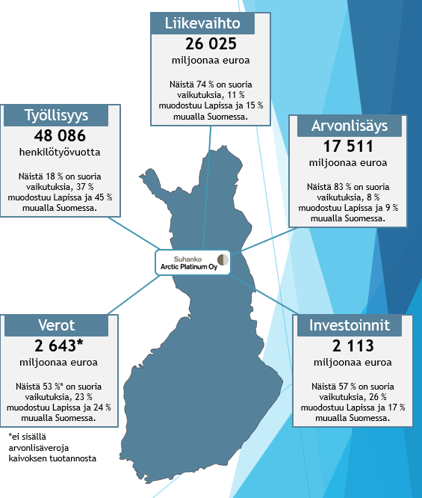
Estimated life-cycle impacts:
Imports into Finland will increase by a cumulative total of 2.9 billion euros, and exports from Finland by a total of 19.3 billion euros
Significant positive impacts on employment and tax revenue
The vast majority of the mine’s investments, operating costs, and positive employment effects are concentrated in Northern Finland
According to the results of studies conducted after 2022, Suhango’s ore reserves and the mine’s operational lifespan have increased significantly.
Image: Life-cycle economic impacts of the Suhanko mine
Ala-Rauho Oy, 2022
According to the results of studies conducted after 2022, Suhango’s ore reserves and the mine’s operational lifespan have increased significantly.
Feasibility Study for the Suhango Mining Project
As of February 2025, approximately 50,000 working hours (30 person-years) have been spent on the study. 99.7% of the work has been carried out by the Finnish companies AFRY, Metso, and New Paakkola. A significant portion of the project’s work is being carried out by personnel from Lapland.
The key areas of development are the construction of an electrified mine to reduce CO2 emissions from operations, as well as minimizing the project’s environmental impact. At peak capacity, Suhango will transport 50 million tons of ore and waste rock per year. Part of the solution involves phasing out diesel-powered haul trucks and transitioning to a fully electric haulage system.
The feasibility study (DFS) is scheduled to be completed in 2026.
Electrified material transport
To reduce carbon dioxide emissions, the transport of materials at the mine has been designed to rely as much as possible on electric conveyors.
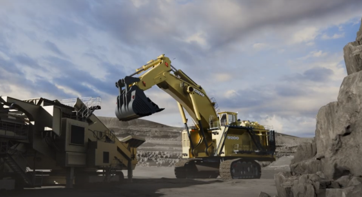
1 Quarrying and Loading
The material is loaded into an electric mobile crusher at the bottom of the quarry
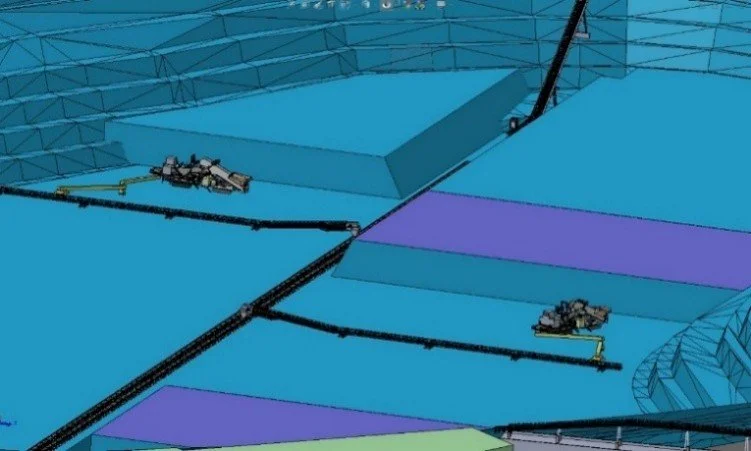
2 Transport to the edge of the quarry
The crushed material is transported to the edge of the quarry by electric conveyors.
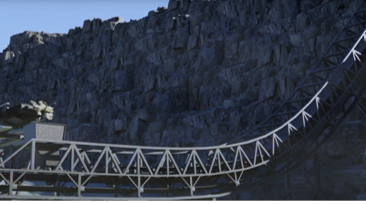
3 Hauling from the quarry
Material is hauled out of the quarry using a steep-angle electric conveyor.
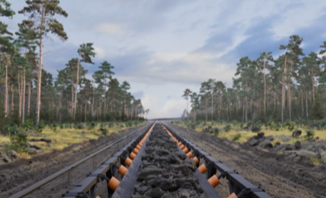
4 Transportation in the mining area
From the edge of the quarry, the material is transported by electric conveyors either to the processing plant or to the waste rock area.
Water Management and the Environment
A significant amount of water accumulates in the mining area, which cannot be stored on site. Three separate water treatment plants will be built at the mine.
To enable the most efficient possible recycling of water from the concentrator (95%)
To remove environmentally harmful flotation chemicals, such as xanthates
To remove phosphorus, aluminum, and, where necessary, nitrogen from water discharged from the mining area
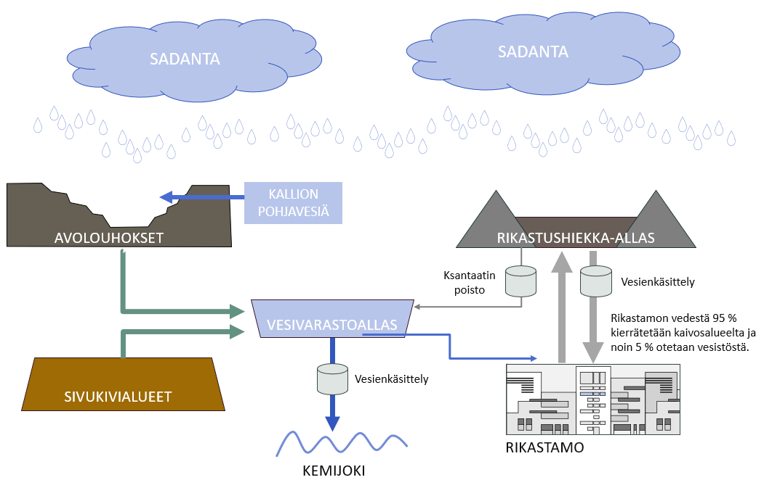
The mine's discharge pipe does not impair the water quality of the Kemijoki River
The treated water is discharged into the Kemijoki River via a discharge pipe at Tervola.
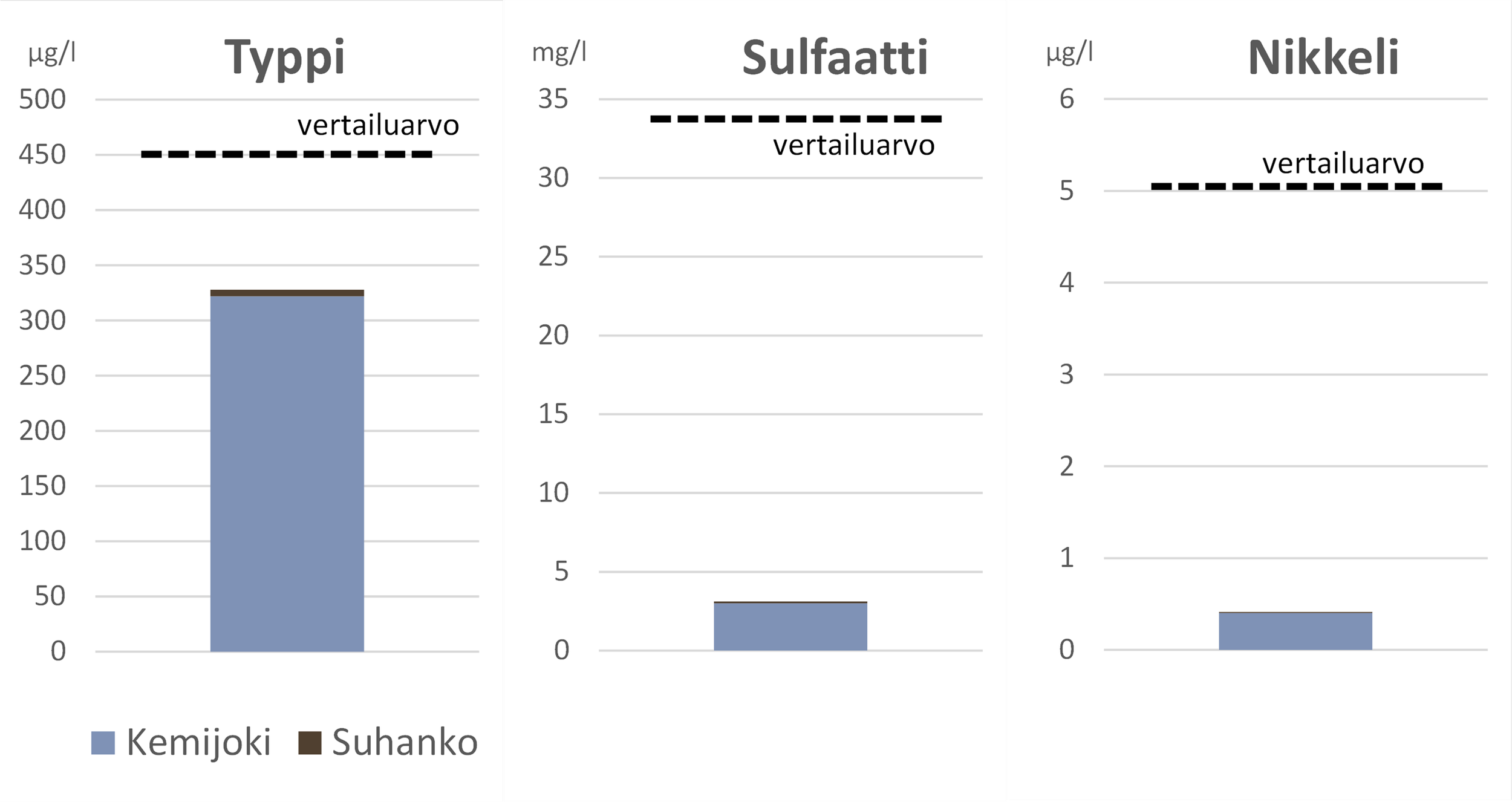
Reference values and current concentrations
The reference values indicate safe concentrations for long-term exposure of organisms.
Blue = current concentration in the Kemijoki River near Tervola
Black color at the top of the bar = Increase in concentration caused by the Suhanko mining project

Suhanko Arctic Platinum, Inc.
The Finnish limited liability company Suhanko Arctic Platinum Oy (SAP) is responsible for developing the Suhanko mining project. SAP is managed by the British private equity firm CD Capital Asset Management Ltd. CD Capital has raised long-term capital, primarily from U.S. funds and foundations, which enables it to make long-term investments in mining projects worldwide.